
Building Skills for Life, Work and the Future
The Duke of Edinburgh’s Award (DofE) is one of the UK’s most respected personal development programmes for young people aged 14–24. It is widely recognised by employers, colleges, and universities as evidence of commitment, resilience, and real-world skills.
At its core, DofE is about personal growth. Participants challenge themselves, step outside their comfort zone, and develop the skills and attitudes that employers actively look for – such as teamwork, leadership, organisation, problem-solving, and perseverance.
Why DofE Matters for Employability
Completing a DofE Award shows far more than academic ability. It demonstrates that a student can:
- Commit to long-term goals
- Manage their time effectively
- Work independently and as part of a team
- Overcome challenges and adapt to new situations
- Take responsibility and show initiative
These are transferable skills that apply directly to the workplace, apprenticeships, further education, and university life. As a result, DofE is frequently referenced in personal statements, CVs, and interviews.
How the DofE Award Works
Students complete four sections over a set period of time. They choose their own activities within each section, allowing them to tailor the Award to their interests, strengths, and future aspirations.
There are three progressive Award levels:
- Bronze
- Silver
- Gold
Each level increases in duration and challenge, supporting steady personal development and confidence building.
The Four DofE Sections
1. Volunteering
Giving Back & Developing Responsibility
Students volunteer regularly to support their community or help others.
Key benefits:
- Builds empathy, reliability, and professionalism
- Develops communication and teamwork skills
- Demonstrates social responsibility to employers
Examples: coaching, mentoring, helping at clubs, charity work.
2. Physical
Health, Motivation & Self-Discipline
Students commit to improving their physical fitness through a chosen activity.
Key benefits:
- Encourages resilience and goal-setting
- Improves mental wellbeing and confidence
- Develops self-motivation and perseverance
Examples: team sports, gym programmes, dance, running.
3. Skills
Learning, Growth & Self-Improvement
Students develop a practical or creative skill outside the classroom.
Key benefits:
- Encourages independent learning
- Builds confidence and adaptability
- Develops focus and problem-solving skills
Examples: music, coding, cooking, photography, first aid.
4. Expedition
Teamwork, Leadership & Real-World Challenge
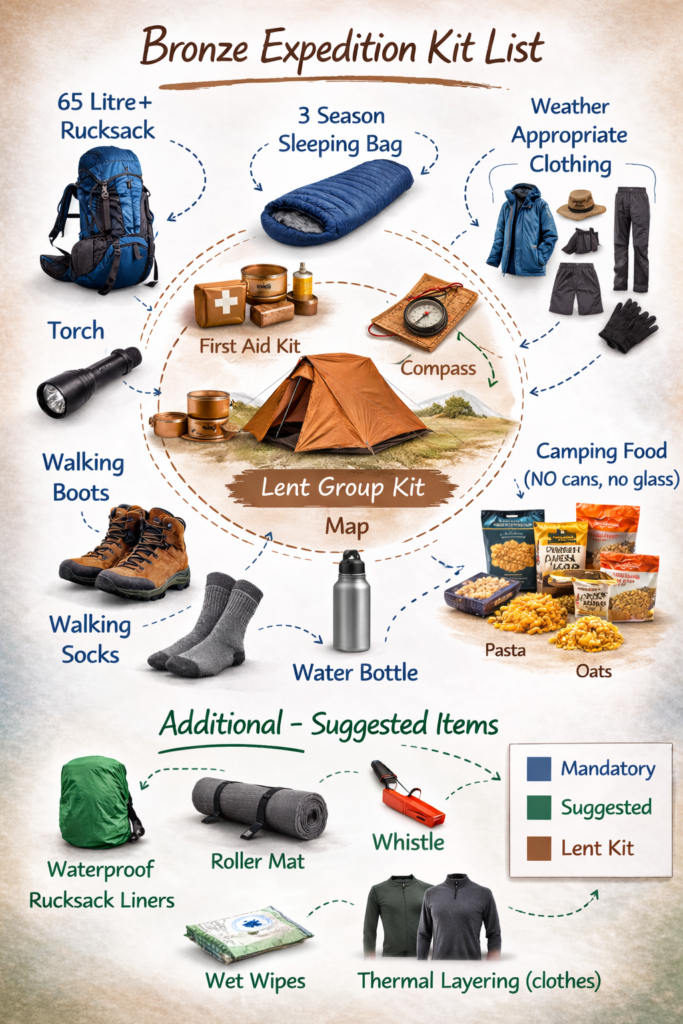
Students plan, train for, and complete a self-sufficient expedition in small teams.
Key benefits:
- Strengthens leadership and teamwork
- Develops planning, decision-making, and resilience
- Builds confidence through overcoming real challenges
This section is often seen as the most rewarding and memorable part of DofE.
Time Commitment by Award Level
Bronze Award (Minimum age: 14)
- Time commitment: 6 months
- Volunteering, Physical, and Skills: 3 months each
- Expedition: 2 days / 1 night
Silver Award (Minimum age: 15)
- Time commitment: 6–12 months
- Volunteering: 6 months
- Physical and Skills: 3–6 months
- Expedition: 3 days / 2 nights
Gold Award (Minimum age: 16)
- Time commitment: 12–18 months
- Volunteering: 12 months
- Physical and Skills: 6–12 months
- Expedition: 4 days / 3 nights
- Residential project: working and living away from home with new people
The Gold Award is highly regarded and often referenced directly by employers and universities.
Progression and Advancement
Students usually start at Bronze and progress through to Silver and Gold, although direct entry at Silver or Gold is possible depending on age.
Each level builds on the last, increasing:
- Independence
- Responsibility
- Leadership expectations
- Depth of personal challenge
This clear progression helps students grow steadily while gaining confidence and valuable experience at every stage.
A Qualification for Life
Completing the Duke of Edinburgh’s Award is not just about earning a certificate—it’s about becoming more confident, capable, and employable. It provides real experiences that prepare students for adult life, the workplace, and future opportunities.
For further information, please visit the official DofE website or contact Ms Randhawa and Ms Thomas, DofE Coordinators, at wat_dofe@watling.academy.